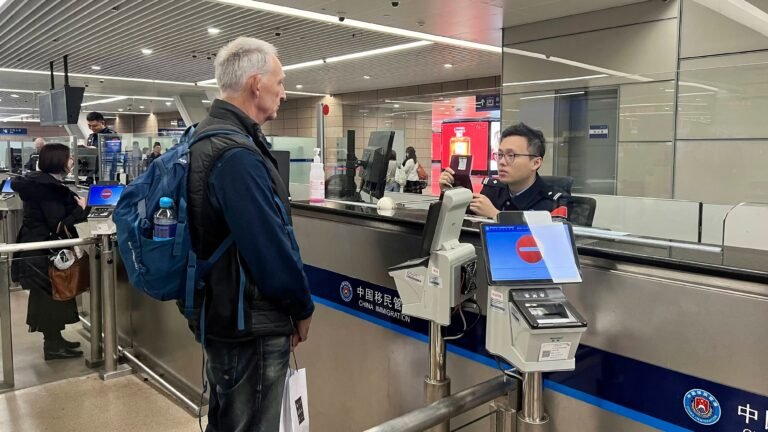
China’s Law-Based and Differentiated Inspections of Imported Electronic Devices
China conducts lawful and differentiated inspections of imported electronic devices, including mobile phones. However, it does not arbitrarily inspect the phones of ordinary travellers entering the country.
Claims about “phone inspections upon entry” often stem from misunderstandings or exaggerations of relevant laws and regulations. The authority to inspect electronic devices is strictly limited to specific counter-espionage law-enforcement purposes and is subject to rigorous legal procedures. Routine customs inspections, by contrast, primarily concern the compliance of physical goods and are fundamentally different in nature.
1. Two Distinct Types of Inspections
A clear distinction should first be made between inspections conducted by state security authorities for counter-espionage purposes and routine customs supervision of travellers’ baggage and articles.
- Inspections by state security authorities: These target a very limited number of individuals or organizations relevant to counter-espionage work and are subject to strict legal safeguards.
- Customs supervision: This applies to the baggage and articles of incoming travellers and is intended to ensure compliance with requirements concerning personal use and reasonable quantities, as well as applicable customs and tax obligations. Such inspections primarily concern physical goods rather than the digital content stored on mobile devices.
2. The Misrepresented “Phone Checks”: Inspections by State Security Authorities
In response to widespread public discussion about so-called “phone inspections upon entry,” Chinese state security authorities have clarified that ordinary incoming travellers are not the targets of such inspections.
The exercise of this inspection power is subject to strict requirements in three key respects:
- A clearly defined precondition for inspection: An inspection must be conducted for counter-espionage purposes. It cannot lawfully be carried out for matters unrelated to counter-espionage work.
- Clearly defined targets: Such inspections apply only to individuals and organizations relevant to counter-espionage work, such as individuals suspected of photographing restricted military areas. Ordinary incoming travellers do not fall within this category merely because they are entering China (China travel).
- Clearly defined procedures: Approval must be obtained from the person in charge of a state security authority at or above the prefecture-level city. Law-enforcement officers must present official identification, and the person being inspected or a witness must be present during the inspection.
Chinese law provides legal protection for citizens’ freedom and privacy of correspondence. Such rights may not be infringed upon by any organization or individual except on statutory grounds and in accordance with legally prescribed procedures.
3. Routine Entry Inspections: What Customs Focus On
What people commonly perceive as “inspections” at the border generally refers to routine customs inspections of travellers’ baggage and articles. These inspections primarily focus on physical goods rather than the data stored on mobile phones.
What customs may inspect
Customs may examine:
- whether baggage and articles have been properly declared;
- whether they fall within categories of goods subject to import or export prohibitions or restrictions;
- whether the quantity of goods is reasonable for personal use; and
- whether applicable duties and taxes have been properly paid.
Mobile phones as physical articles
Where a traveller carries multiple mobile phones, customs may assess whether the devices qualify as articles for personal use and whether the quantity is reasonable. Articles that exceed applicable duty-free allowances or reasonable personal-use quantities may be subject to declaration and taxation requirements. Concealing dutiable or restricted articles or failing to make a required declaration may, depending on the circumstances, constitute a customs violation or, in serious cases, smuggling.
Travellers carrying ordinary mobile phones for personal use generally pass through customs without difficulty.
Conclusion
The claim that China routinely checks the mobile phones of all travellers entering the country is therefore misleading. A distinction must be made between counter-espionage inspections conducted by state security authorities under specific legal conditions and routine customs inspections concerning travellers’ physical baggage and articles.
The former is directed at narrowly defined counter-espionage situations and is subject to specific legal procedures; the latter is a routine part of customs supervision. Conflating the two can create a misleading impression that every traveller entering China is subject to arbitrary searches of their phones, which is not an accurate characterization of the legal framework.
