When Is the Best Time to Travel to China?
There is no one-size-fits-all answer to this question. China is a vast country stretching thousands of kilometres from north to south. From snow-covered northern wildernesses to tropical islands, from water towns in the east to desert landscapes in the west, dramatic differences in climate and scenery create unique travel experiences in every season. Rather than searching for a “perfect time” to visit, ask yourself first: What kind of China do you want to see?
🍃 Spring (March–May): Blossoms and Historic Cities at Their Finest
Spring is a top choice for many first-time visitors to China. Temperatures rise without becoming unbearably hot, nature awakens, and waves of flowers come into bloom one after another.
What to see: In March, Wuhan bursts into bloom with cherry blossoms, with Wuhan University and East Lake Cherry-Blossom Garden among the most popular places to see them. In April, Luoyang comes alive with peonies, creating a spectacular floral display. Misty West Lake in Hangzhou and the classical gardens of Suzhou in the Yangtze River Delta are perfect for leisurely walks and photography. In Nyingchi, Tibet, wild peach blossoms reach their full glory from late March to April, creating breathtaking pink floral landscapes beneath snow-capped mountains.
Heads-up: The May Day holiday, which begins around 1 May, is a major national travel rush. Popular attractions can become extremely crowded, so book accommodation and attraction tickets well in advance.
☀️ Summer (June–August): Cool Grasslands and High-Altitude Escapes
Most low-lying cities in China become hot and humid in summer, with temperatures in some places feeling as though they soar above 40°C. A smart way to beat the heat is to head for mountains, grasslands, plateaus, or other high-altitude regions.
What to see: The Ili grasslands in Xinjiang and the Hulunbuir grasslands in Inner Mongolia are at their most lush and vibrant. Vast green pastures dotted with cattle and sheep bring the imagery of the ancient verse “Under the sky, the wilderness stretches wide” vividly to life. The Qinghai-Tibet Plateau in Tibet and Qinghai, the Yunnan-Guizhou Plateau in Yunnan and Guizhou, and Jiuzhaigou in Sichuan offer pleasantly cool summer weather, making them ideal escapes from the sweltering heat. For spectacular water scenery, Huangguoshu Waterfall is at its most impressive in July and August, when its water flow is at its strongest.
Watch out: Typhoons frequently affect eastern coastal areas in July and August, while many inland cities experience oppressive heat. Plan your itinerary carefully if you want to avoid extreme weather.
🍁 Autumn (September–November): The Widely Acclaimed Golden Travel Season
Considering the weather, scenery, and overall visitor experience, autumn is widely regarded as one of the best seasons for travelling in China. Across much of the country, days are crisp, rainfall is relatively low, skies are often clear, and temperatures are comfortably mild.
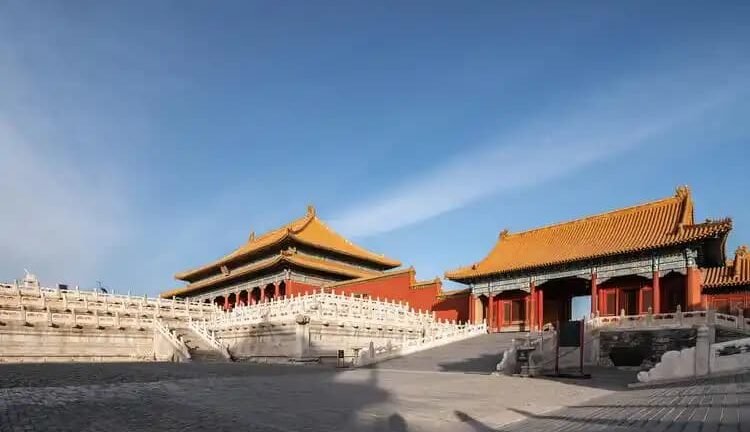
What to see: This is arguably China’s most colourful season. The Badaling and Mutianyu sections of the Great Wall near Beijing are particularly spectacular amid the red autumn foliage. The lakes and forests of Jiuzhaigou in Sichuan turn shades of gold and crimson, creating a fairy-tale landscape beloved by photographers. Kanas in Xinjiang, often described as “God’s palette”, dazzles visitors with its golden birch forests. The historic cities of Xi’an and Chengdu also offer pleasant autumn weather for sightseeing, exploring cultural attractions, and sampling local cuisine.
Critical pitfall to avoid: The National Day Golden Week, from 1 to 7 October, is China’s peak domestic travel period. Iconic attractions such as the Great Wall, the Forbidden City, and the Bund can be overwhelmed by crowds. Transport and hotel prices also rise sharply, which can significantly affect the overall travel experience.
❄️ Winter (December–February): Two Contrasting Extremes
Winter travel in China offers two contrasting choices: embrace the icy landscapes of the north or escape the cold for the warm southern coast.
What to see: Harbin is China’s star winter destination. The massive illuminated ice sculptures at Harbin Ice-Snow World create a dreamlike winter wonderland. Snow blankets Heavenly Lake (Tianchi) on Changbai Mountain in Jilin, giving the landscape a serene and almost otherworldly beauty. If you would rather escape the cold, Sanya on Hainan Island offers tropical beaches, warm seawater, and swaying coconut palms, allowing you to trade heavy winter layers for a relaxing seaside getaway.
Important note: The Spring Festival, usually celebrated in January or February, brings the massive Spring Festival travel rush across China. Transportation networks become extremely busy, while popular tourist attractions can be packed with visitors. If you plan to travel during this period, expect large crowds and book flights, trains, accommodation, and attraction tickets several months in advance whenever possible.
📅 Quick Monthly Destination Reference
| Month | Recommended Destinations | Highlights | Notes |
|---|---|---|---|
| Jan–Feb | Sanya (Hainan), Harbin (Heilongjiang) | Tropical beach holidays / Magnificent ice-and-snow festival | Avoid the Spring Festival travel peak |
| Mar | Wuhan (Hubei), Nyingchi (Tibet) | Cherry blossoms, peach blossoms | Rainy season begins in southern China; pack rain gear |
| Apr | Luoyang (Henan), Suzhou–Hangzhou (Jiangsu, Zhejiang) | Peony festival, classical spring gardens | Short travel surge during the Qingming Festival |
| May | Guilin (Guangxi), Changsha (Hunan) | Li River scenery, urban exploration | Major national travel rush during the May Day holiday |
| Jun–Aug | Xinjiang, Inner Mongolia, Qinghai, Guizhou | Grasslands, alpine lakes, cool mountain landscapes | Eastern lowlands can be scorching; typhoons may affect coastal areas |
| Sep | Jiuzhaigou (Sichuan), Kanas (Xinjiang) | Early-autumn colourful forests | An excellent time to travel before National Day |
| Oct | Beijing, Xi’an after National Day | Great Wall autumn scenery, historic sites | Steer clear of National Day Golden Week |
| Nov | Wuyuan (Jiangxi), Tengchong (Yunnan) | Village harvest scenes, golden ginkgo forests | Northern China grows cold; bring warm outerwear |
| Dec | Harbin (Heilongjiang), Sanya (Hainan) | Ice-and-snow wonderland / Warm coastal escape | Hotel prices may rise around Christmas and New Year’s Day |
💡 Final Tips
Rather than asking “When is best time to travel to China?”, ask yourself: “What do I want to experience?”
Autumn, especially September and mid-to-late October after the National Day holiday, offers one of the most well-rounded travel experiences, with pleasant weather and diverse scenery. Just make sure you avoid the National Day holiday crowds.
Chase spring if flower blooms are your priority. Head north or to the highlands in summer for grassland adventures and cooler temperatures. Choose winter for magical snow-covered landscapes in the north or tropical sunshine in the south.
China is simply too vast to see everything in a single trip. No matter which season you choose, the country has a remarkable way of surprising you with landscapes, cultures, and experiences you may never have expected.

2 thoughts on “When is best time to travel to China”